Introduction to Traits
VectorByte Methods Training
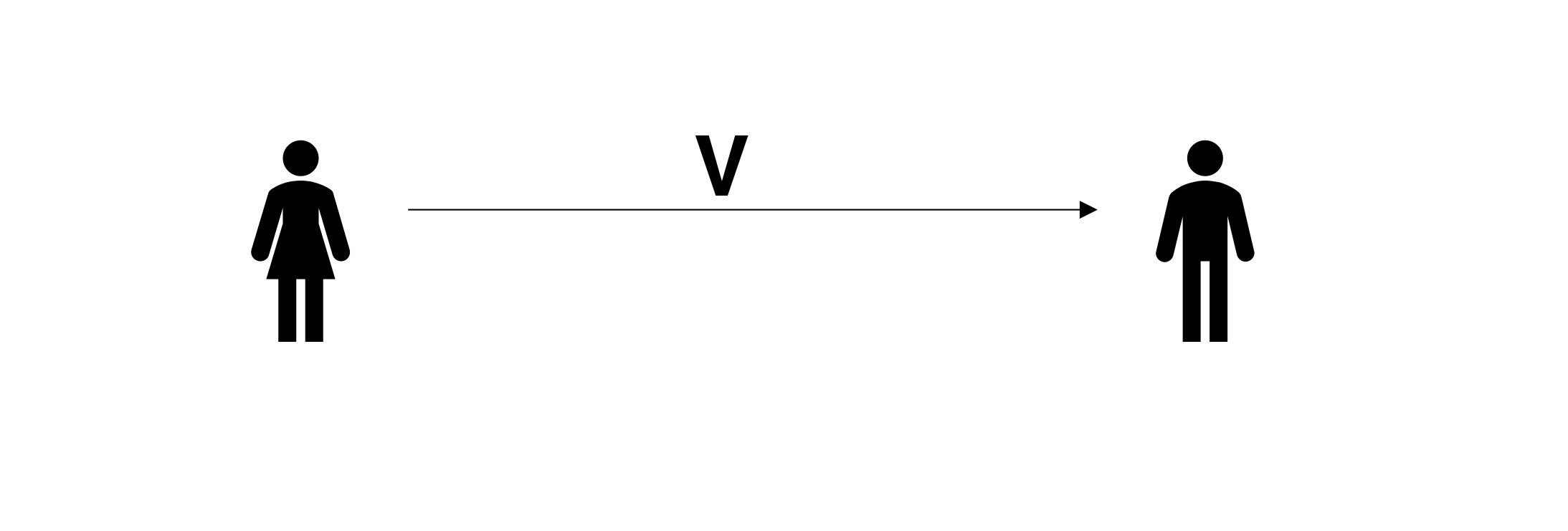
What is a vector?
Any agent which carries and transmits an infectious agent between hosts
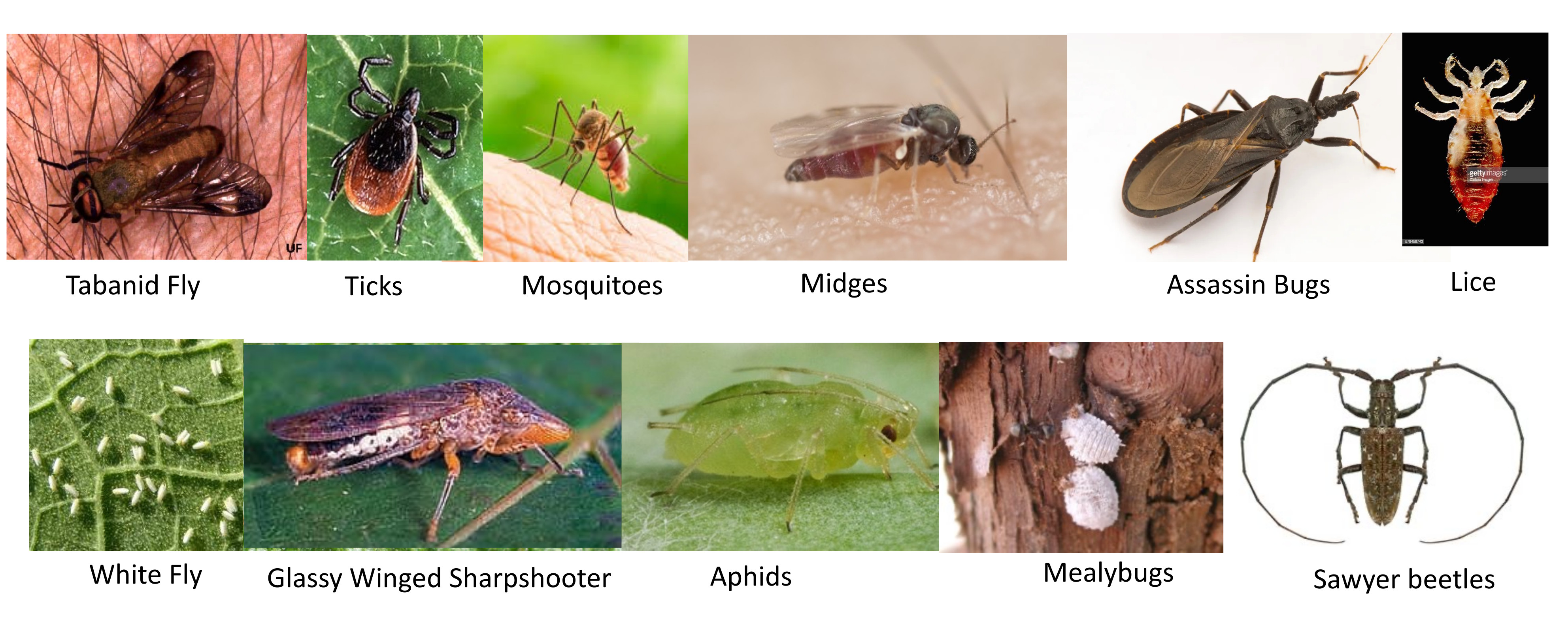
What kinds of animals are vectors?
Many! Although arthropods are most commonly studied
Overview of VBD Transmission
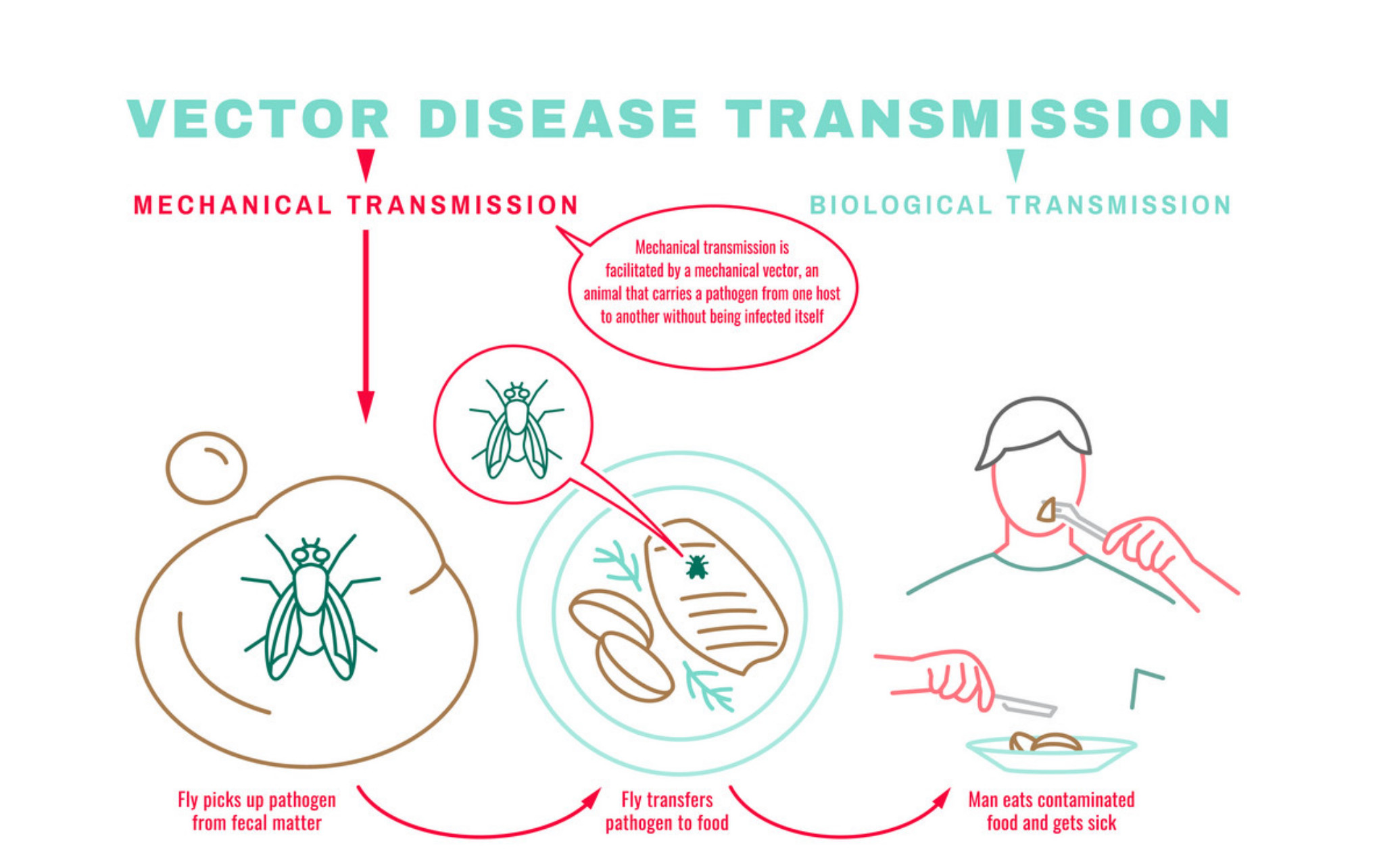
Mechanical Transmission
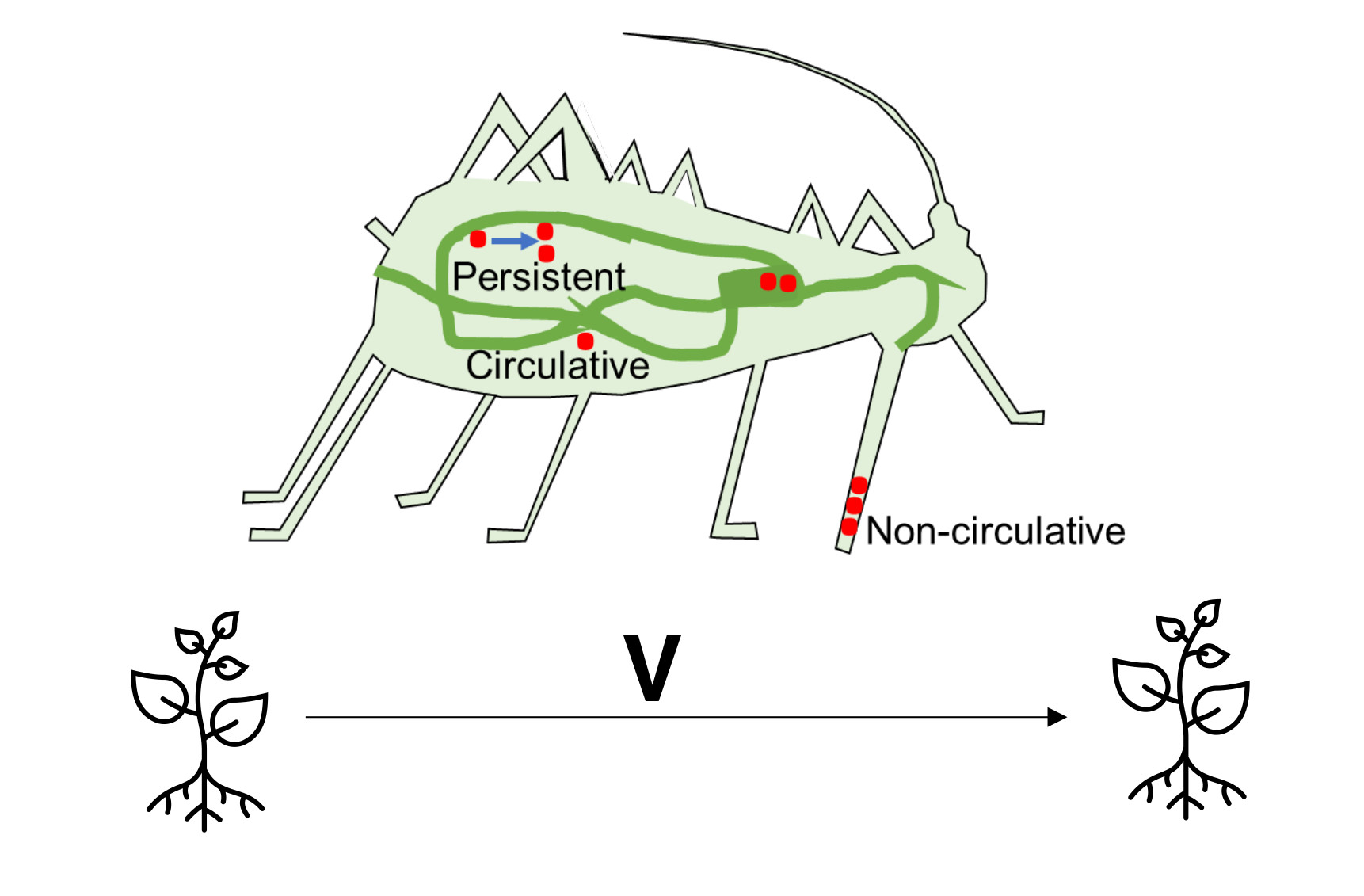
Overview of VBD Transmission
Biological Transmission
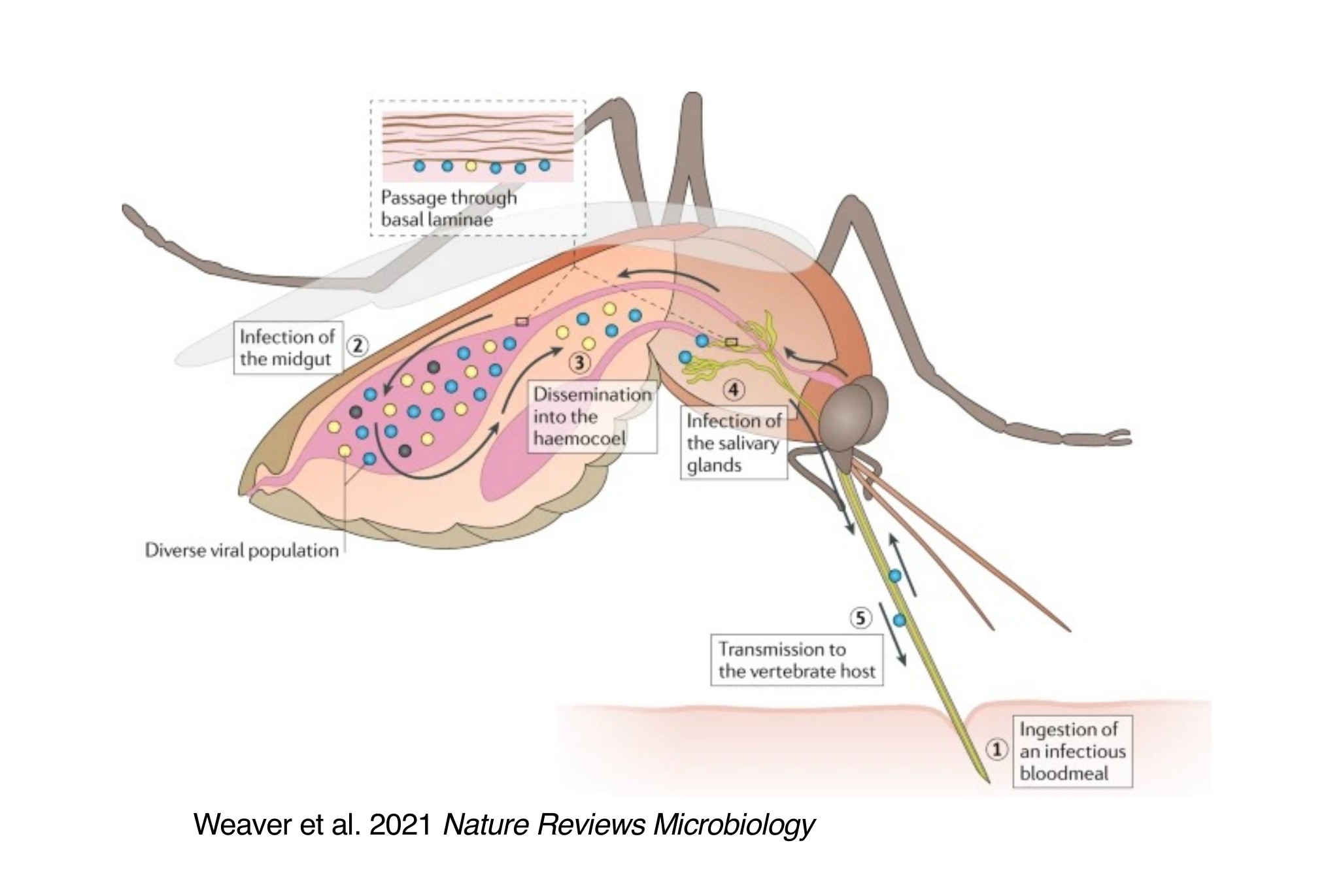
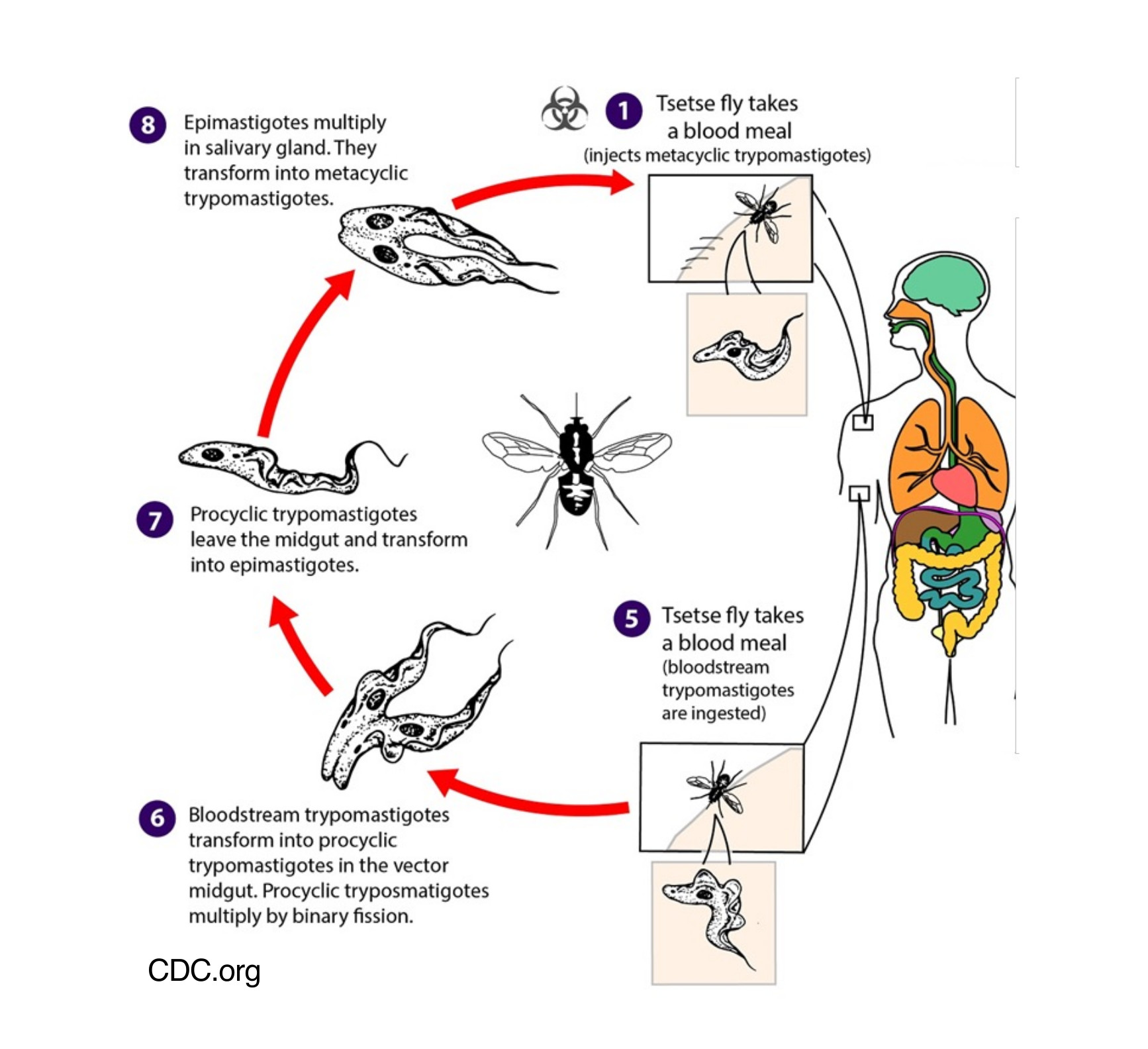
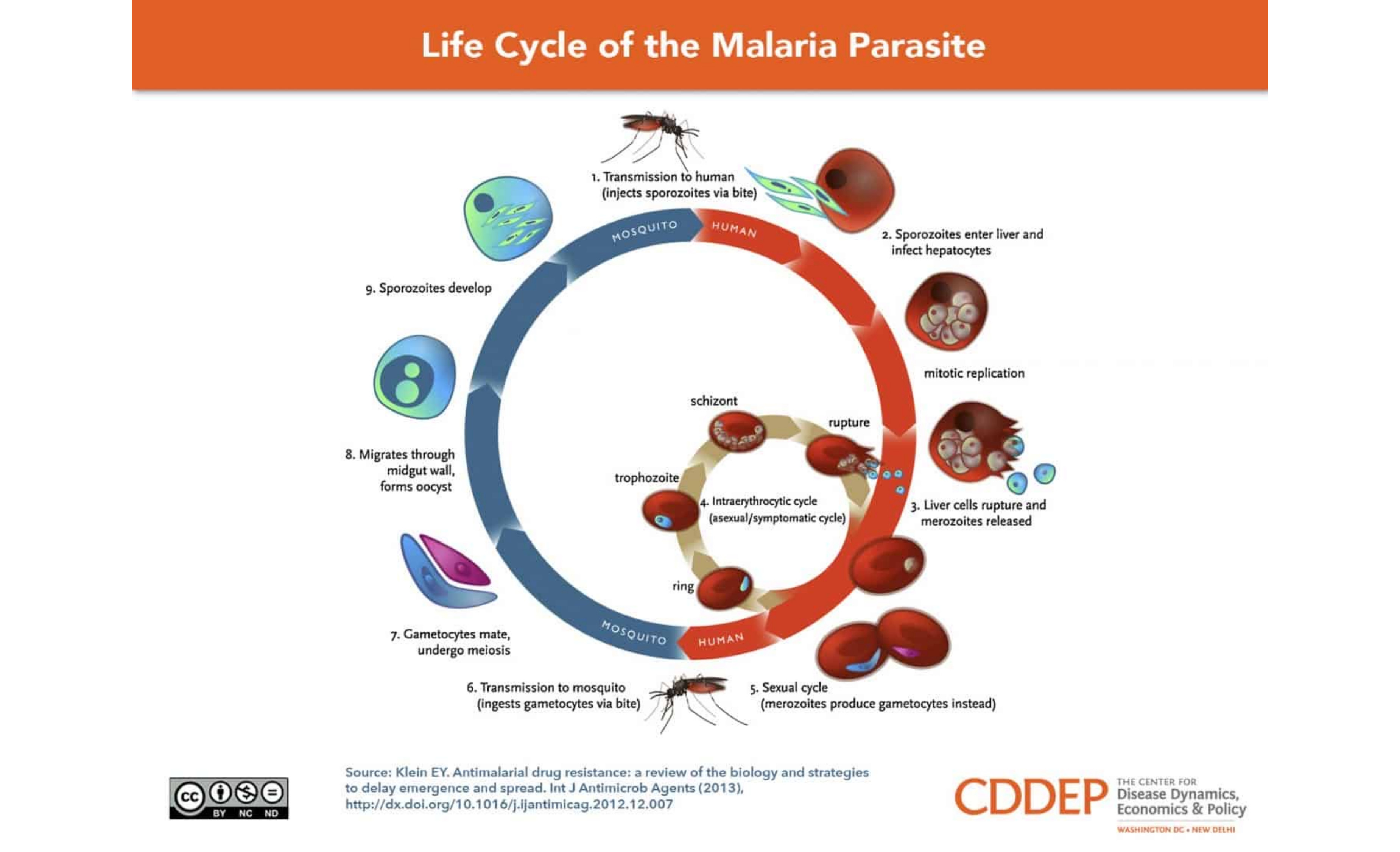
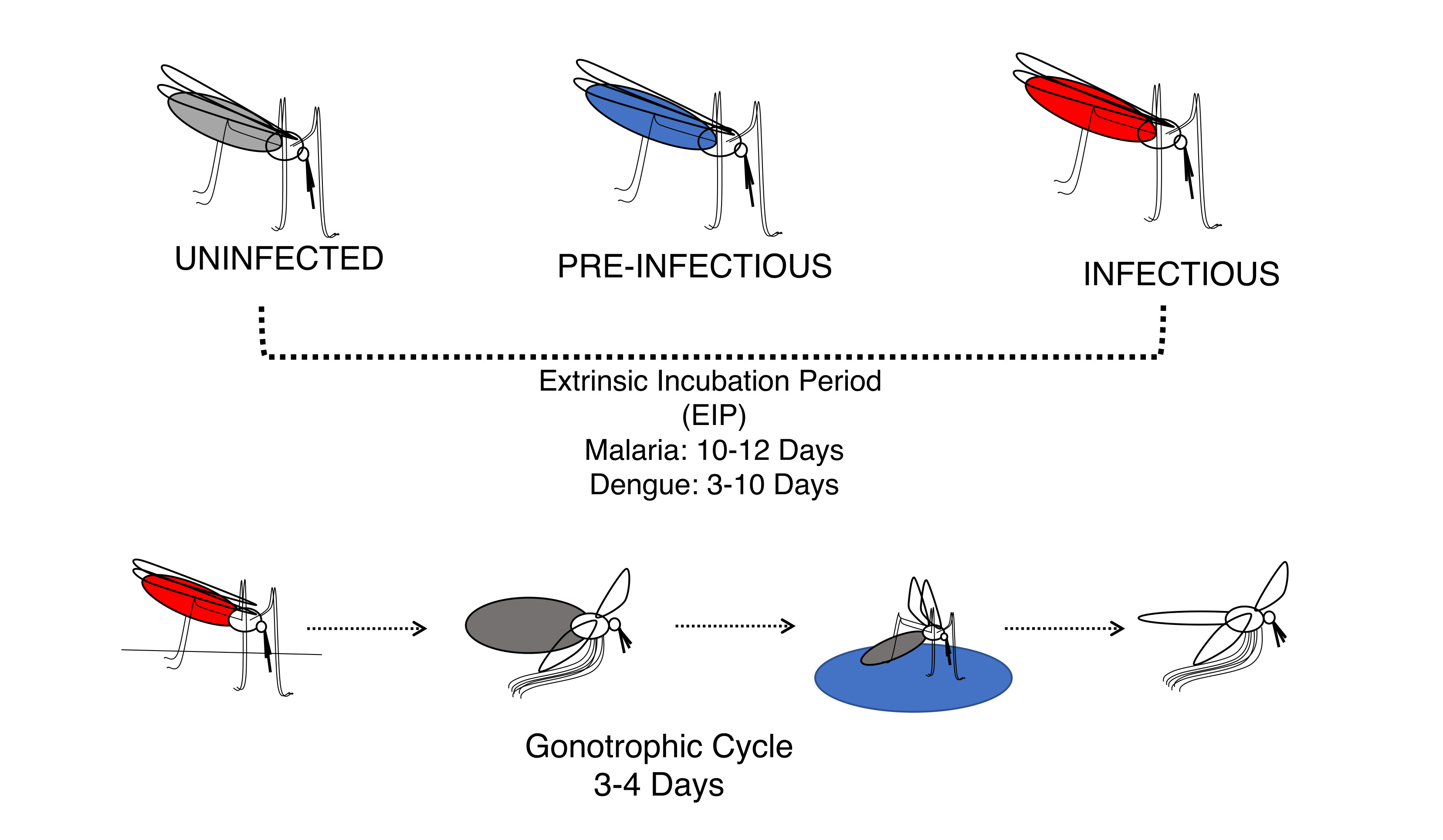
VBD Transmission is the Intersection of Two Cycles
Intrinsic and Extrinsic Incubation Periods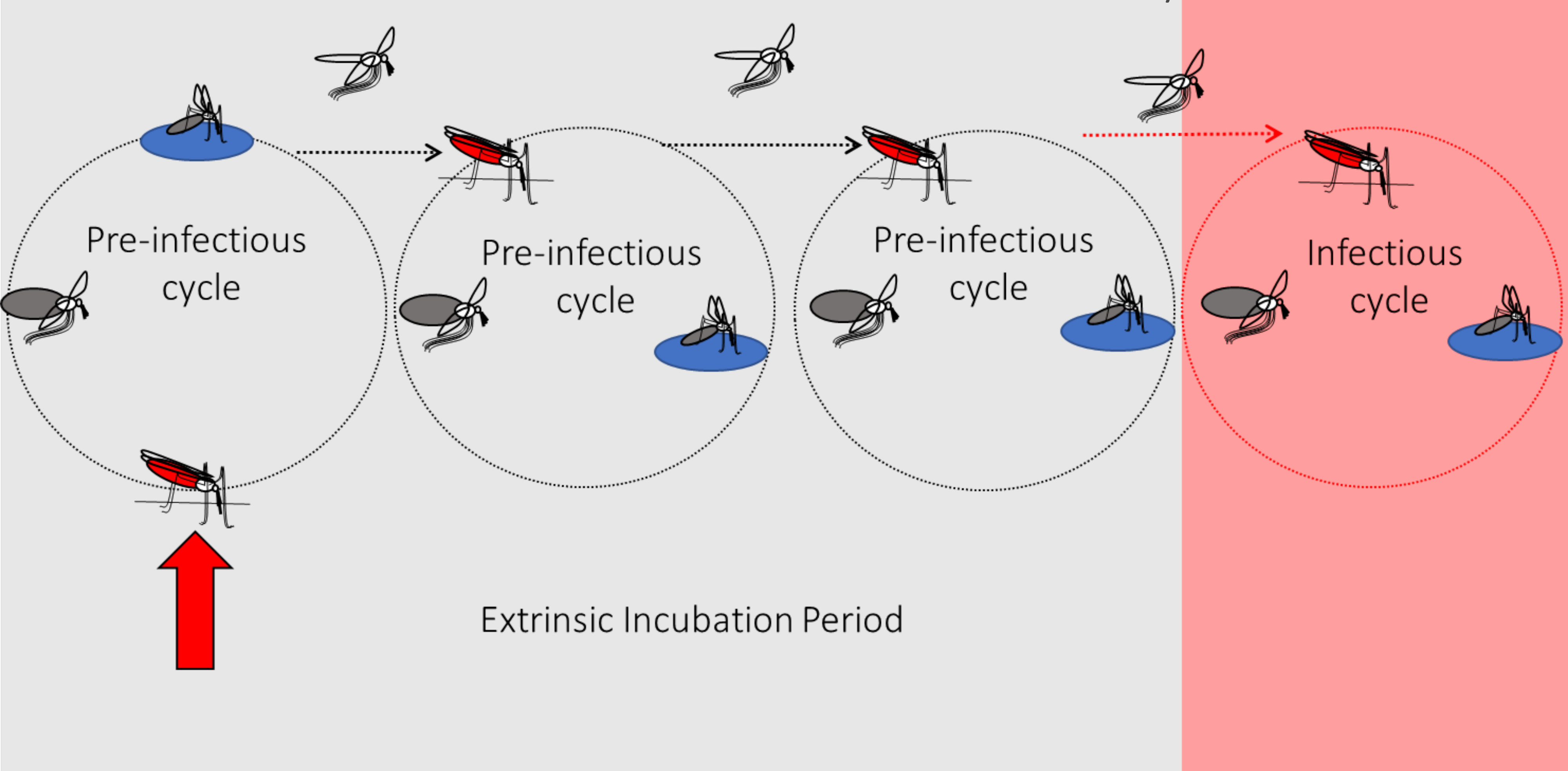
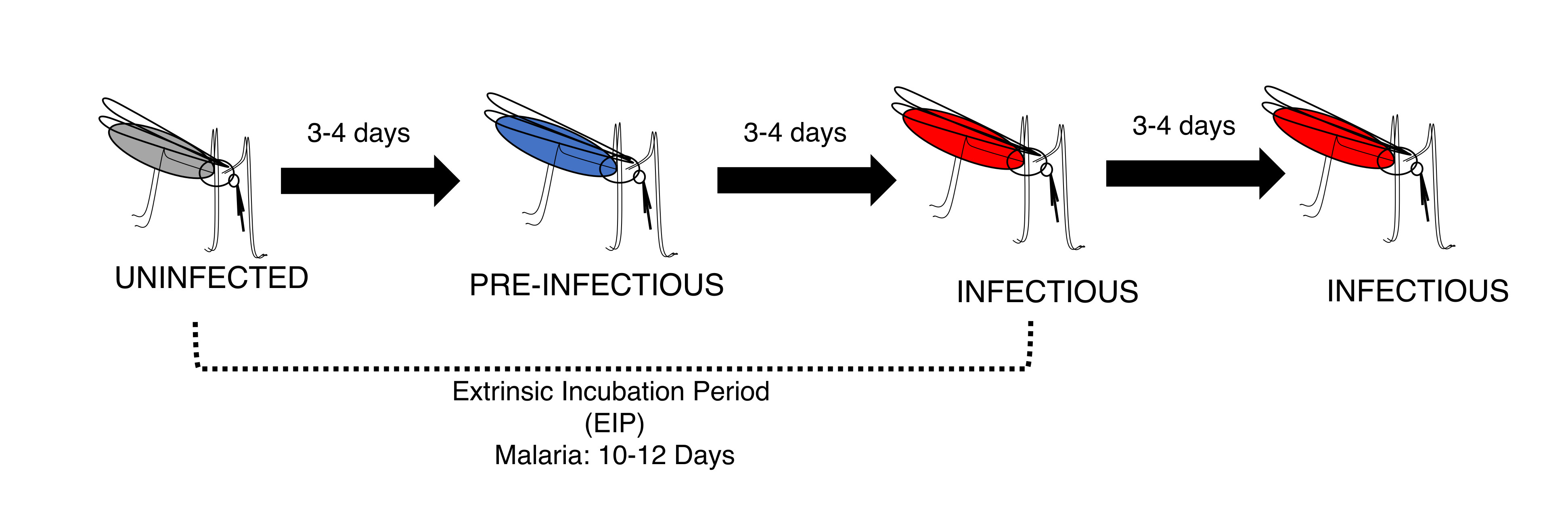
What elements do we need to include?
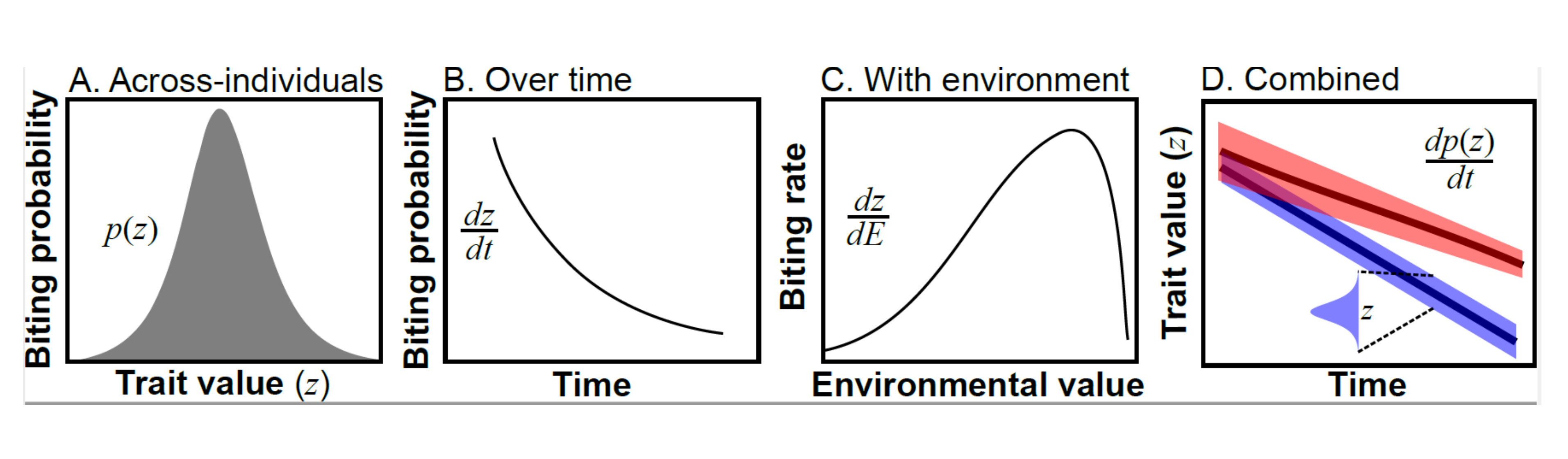
Variability in Traits
SIR Model
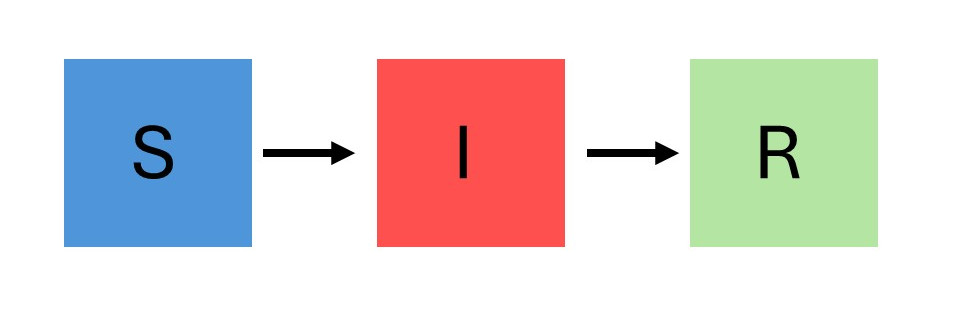
We can get more complex/realistic models…
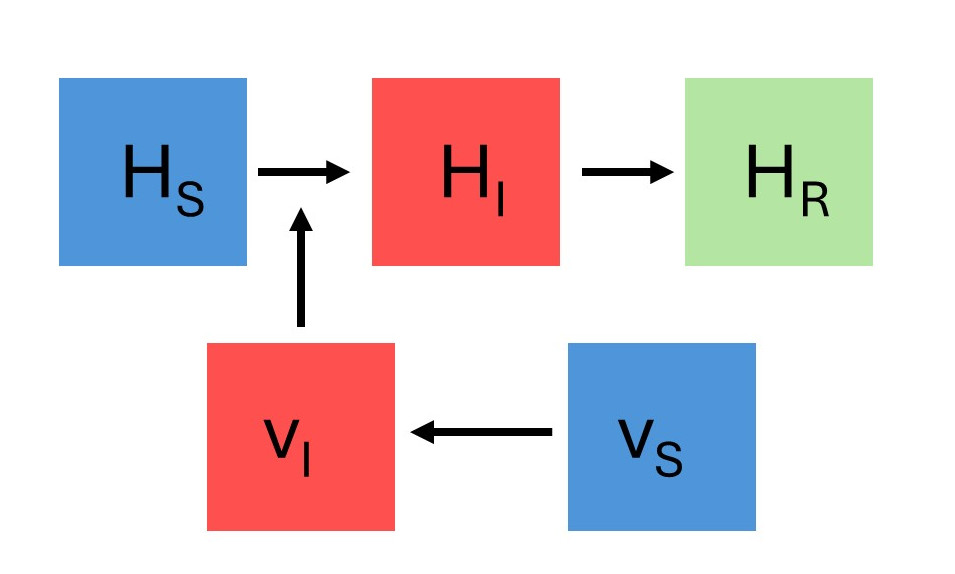
H=host, V=vector, \(_S\)=susceptible, \(_I\)=infected, \(_R\)=recovered
But with every parameter added, more data are needed!
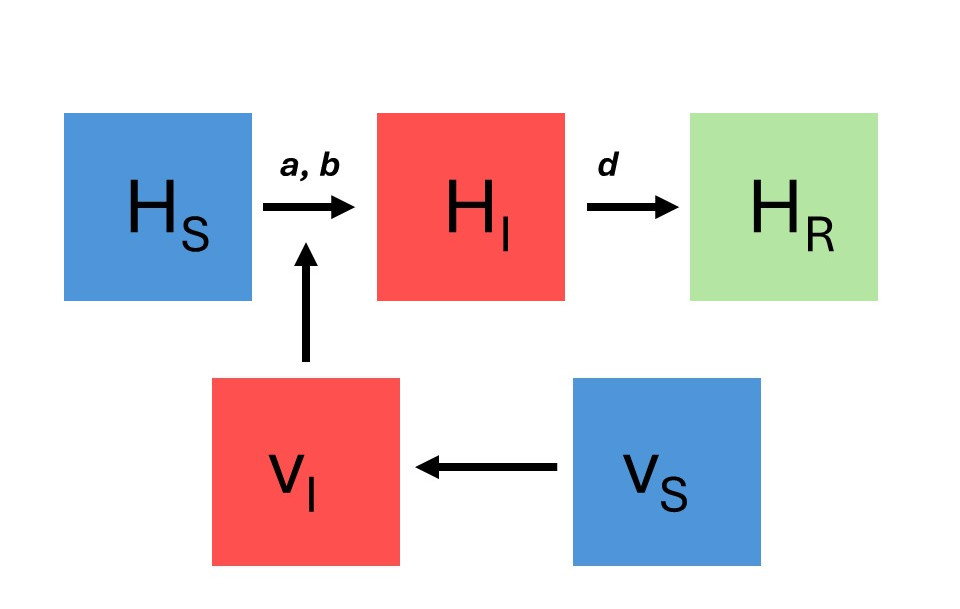
H=host, V=vector, \(_S\)=susceptible, \(_I\)=infected, \(_R\)=recovered a=biting rate, b=vector to host transmission success (proportion of bites), d=recovery
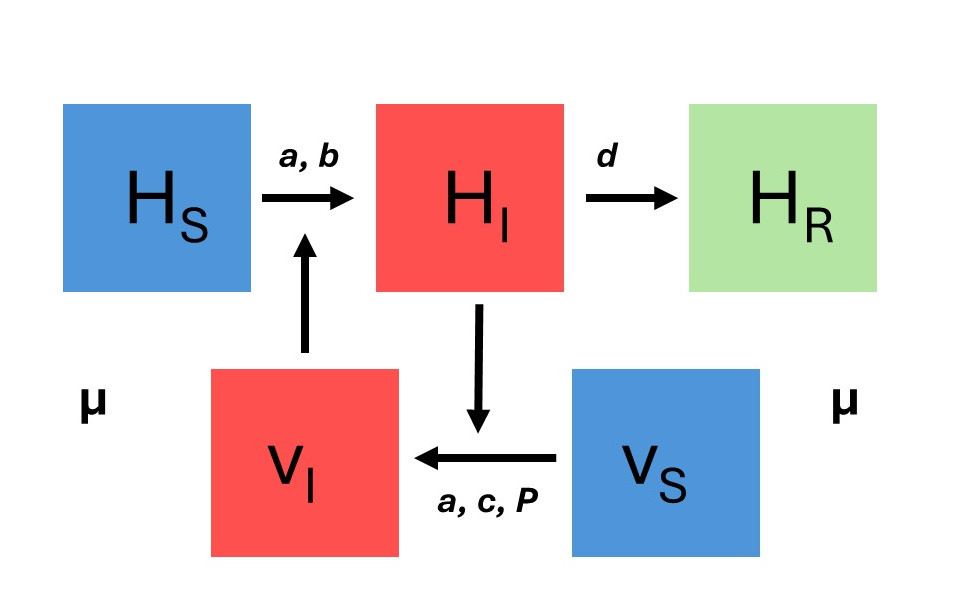
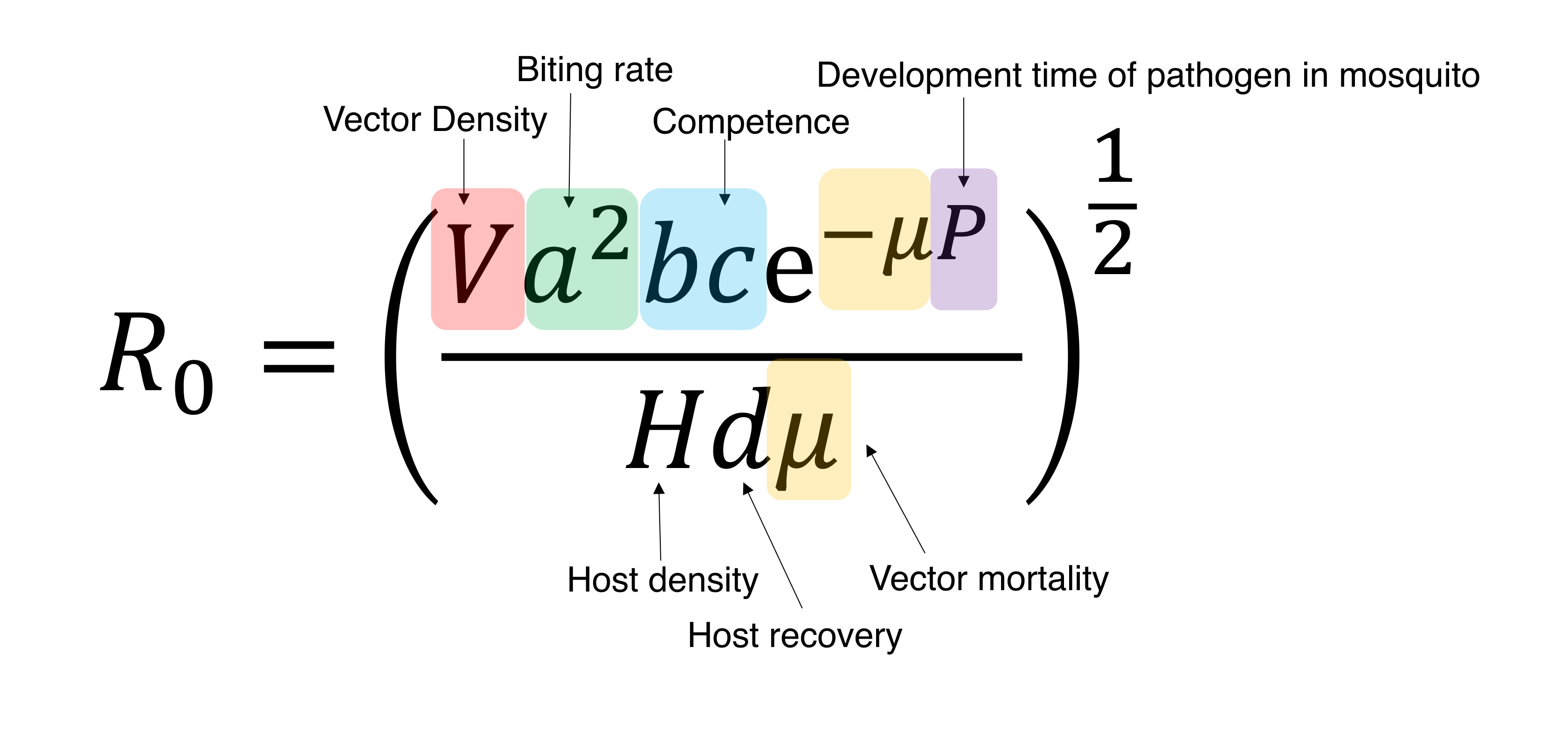
H=host, V=vector, \(_S\)=susceptible, \(_I\)=infected, \(_R\)=recovered a=biting rate, b=vector to host transmission success (proportion of bites), d=recovery, c=host to vector transmission success (proportion of bites), P=extrinsic incubation period, \(\mu\)=adult vector mortality rate
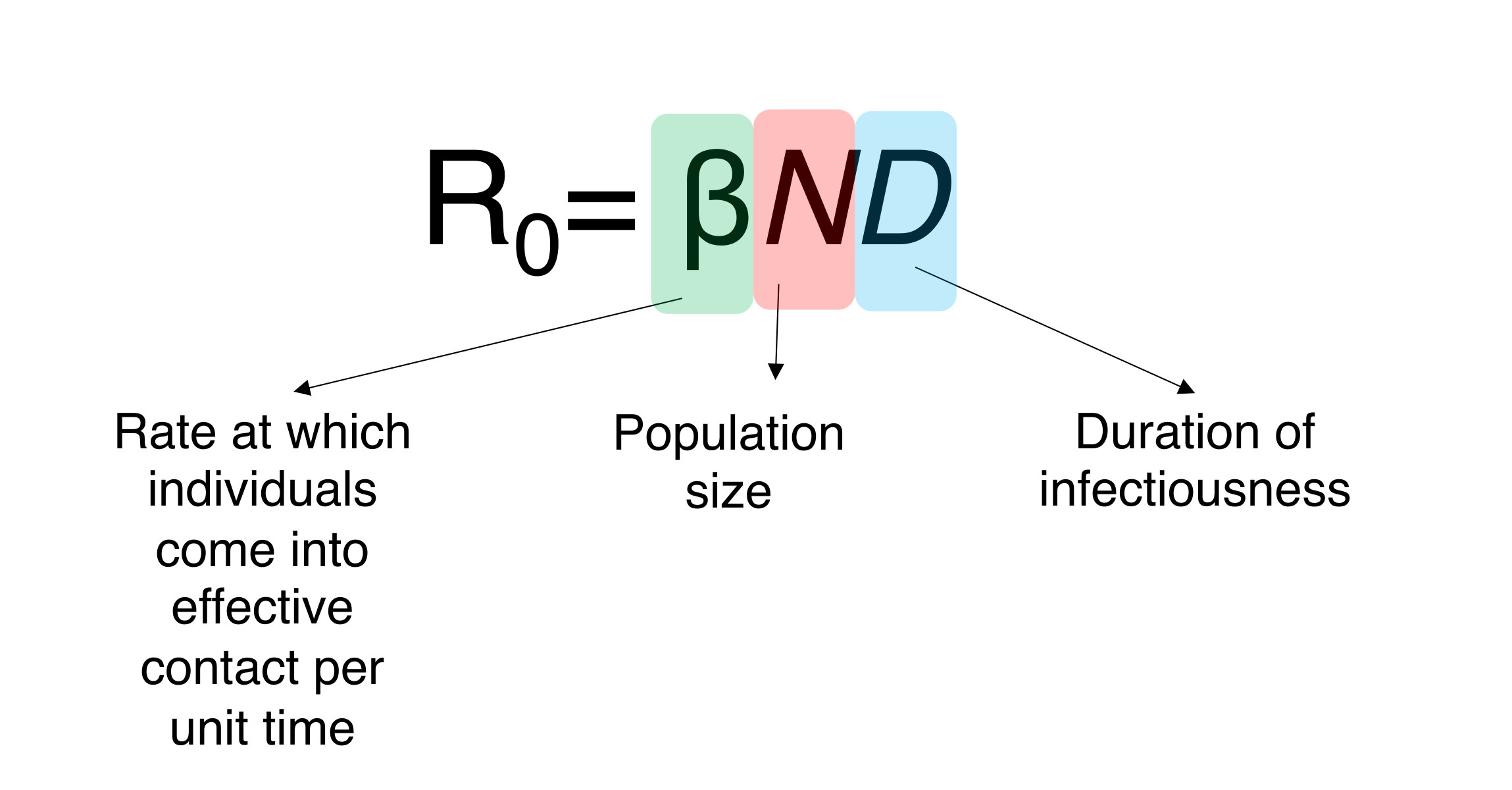
\(R_0\): Directly-Transmitted Pathogen
\(R_0\): Vector-Borne Pathogen
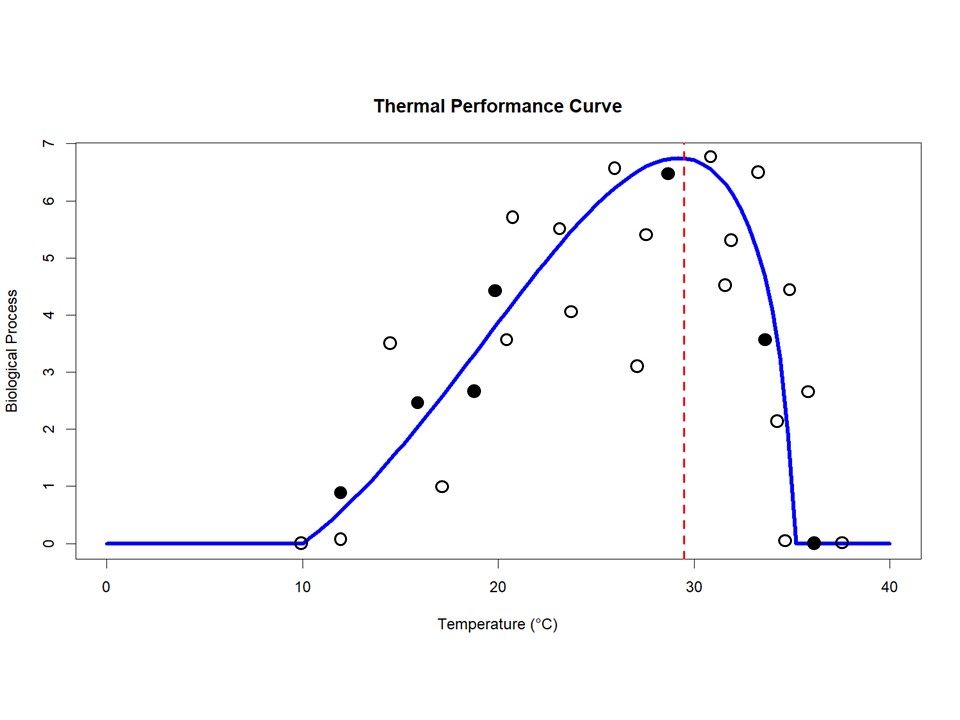
Thermal Performance Curves (TPCs)
Vectors of interest are typically ectothermic
Biological reactions typically go faster as temperature increases
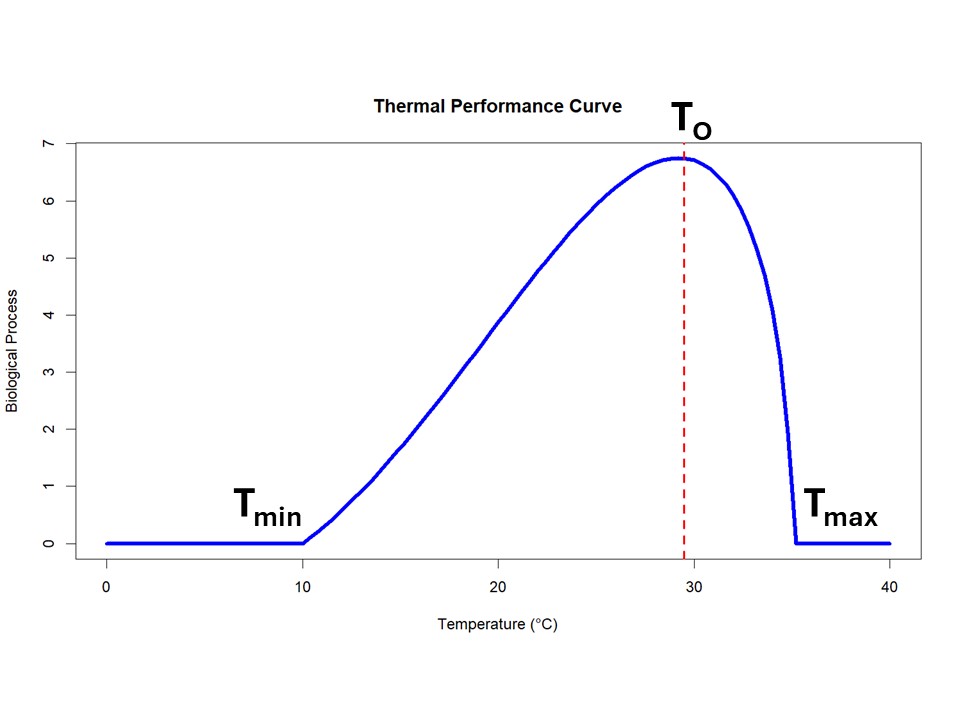
But there’s a limit!
Nearly every aspect of life history is influenced by temperature
We want to include parameters in relation to temperature
Biologically meaningful models
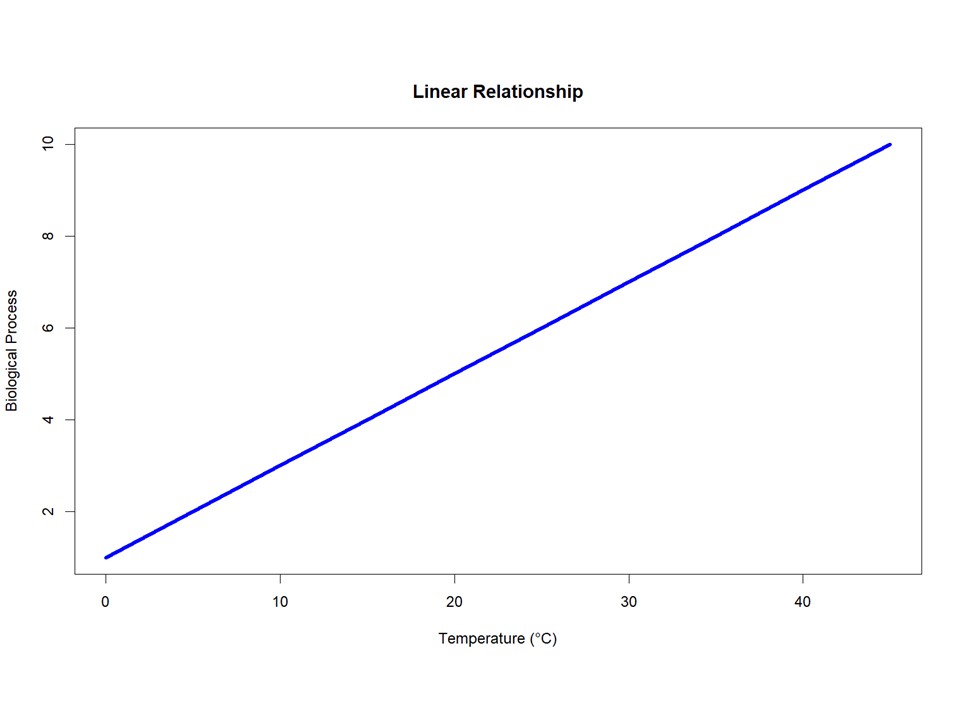
Old assumptions were linear
Unimodal curves are more realistic
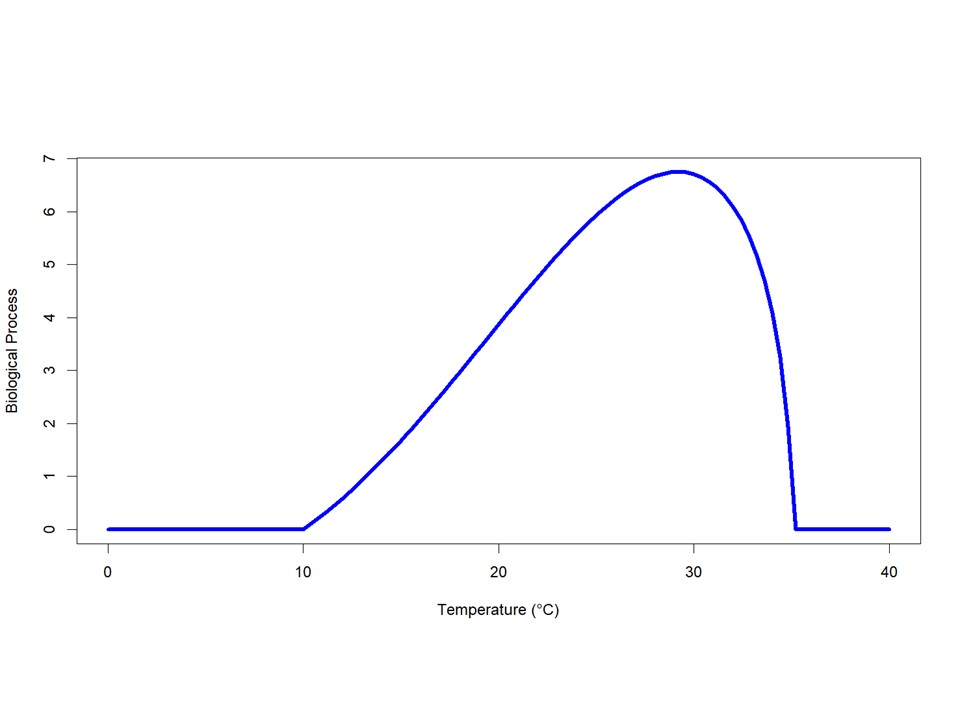
Different traits have different curves
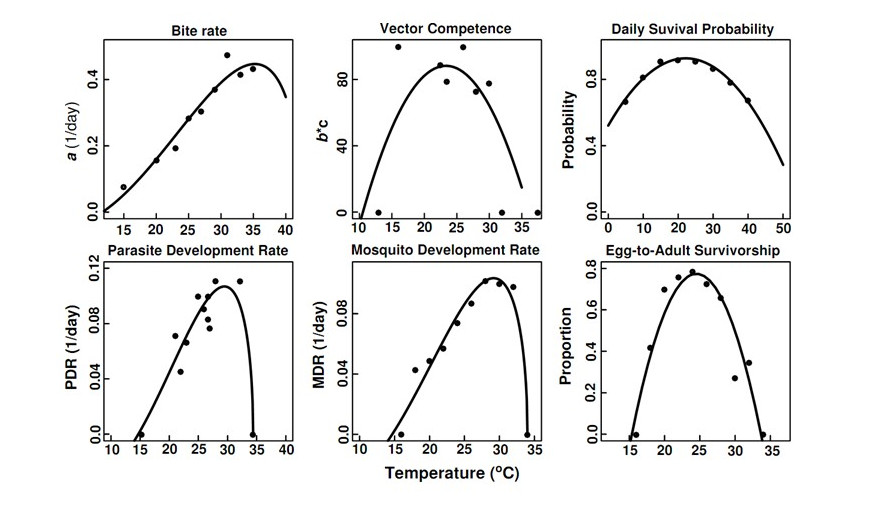
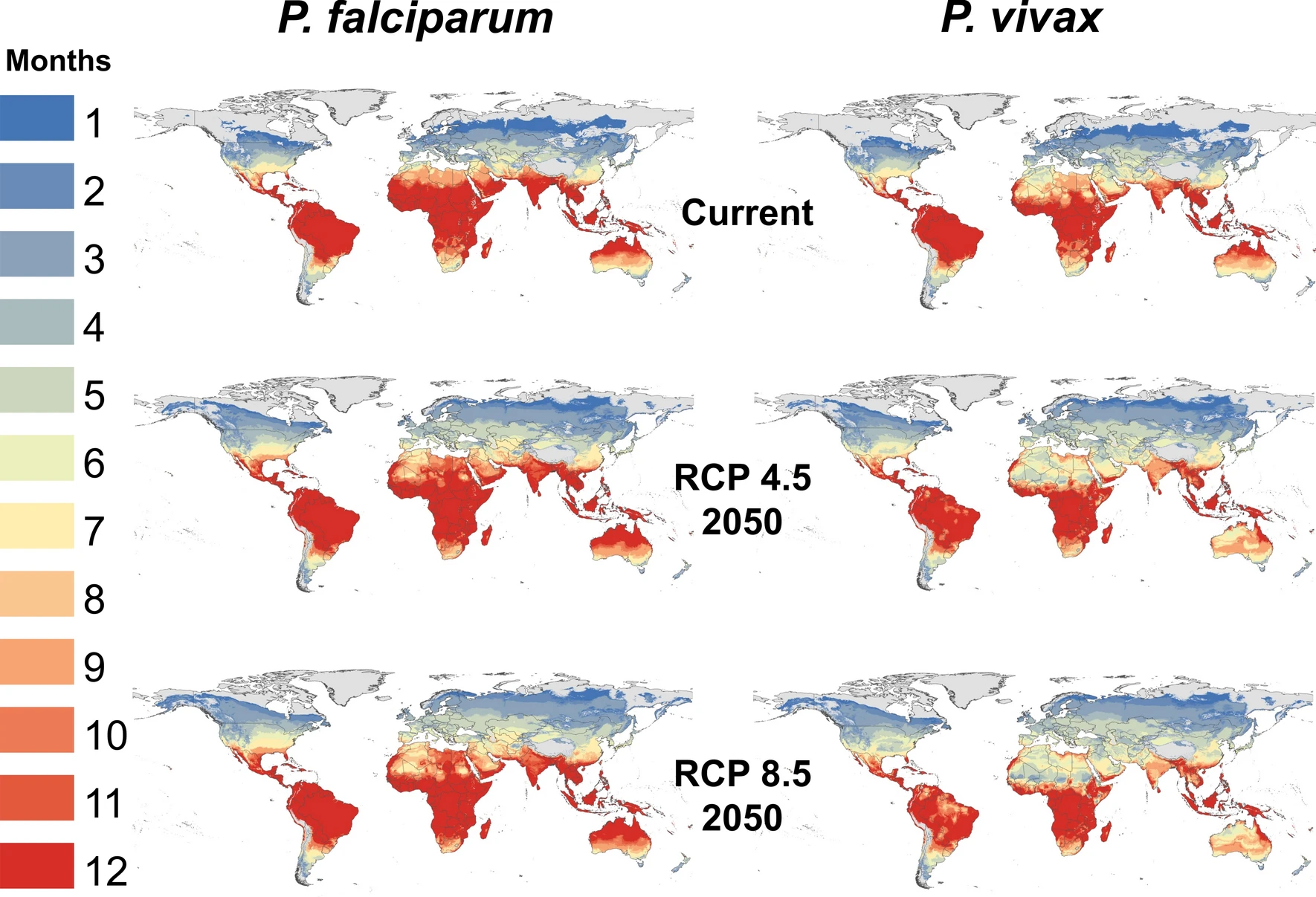
Mapping current and future thermal limits to suitability for malaria transmission by the invasive mosquito Anopheles stephensi. Ryan et al. 2023. Malaria Journal.
Estimating TPCs
TPCs are derived using empirical data from laboratory experiments.
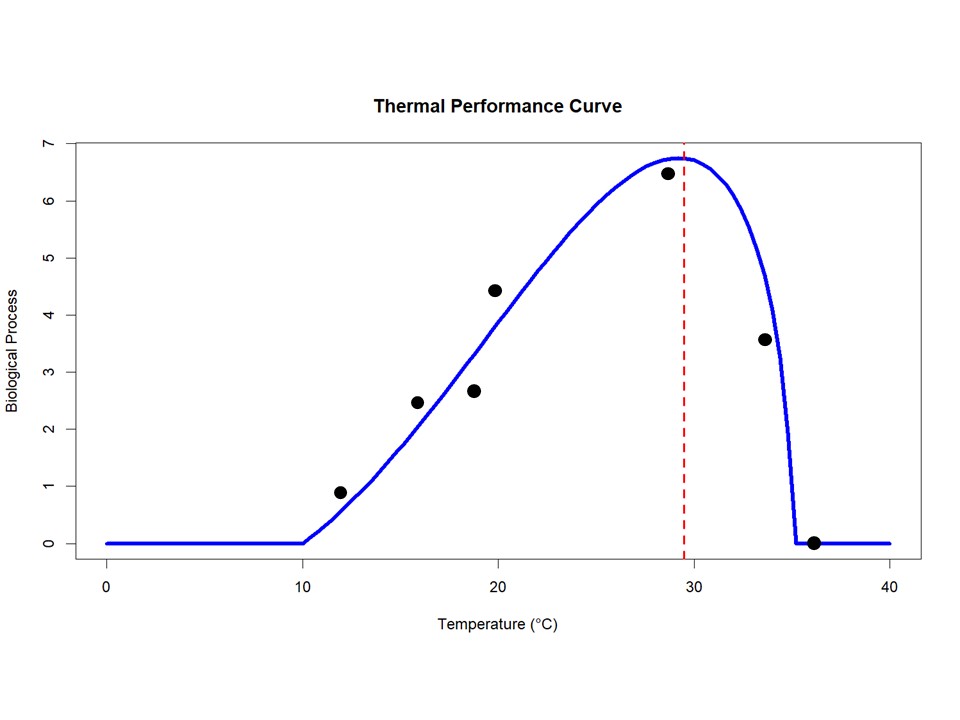
Fitting TPCs
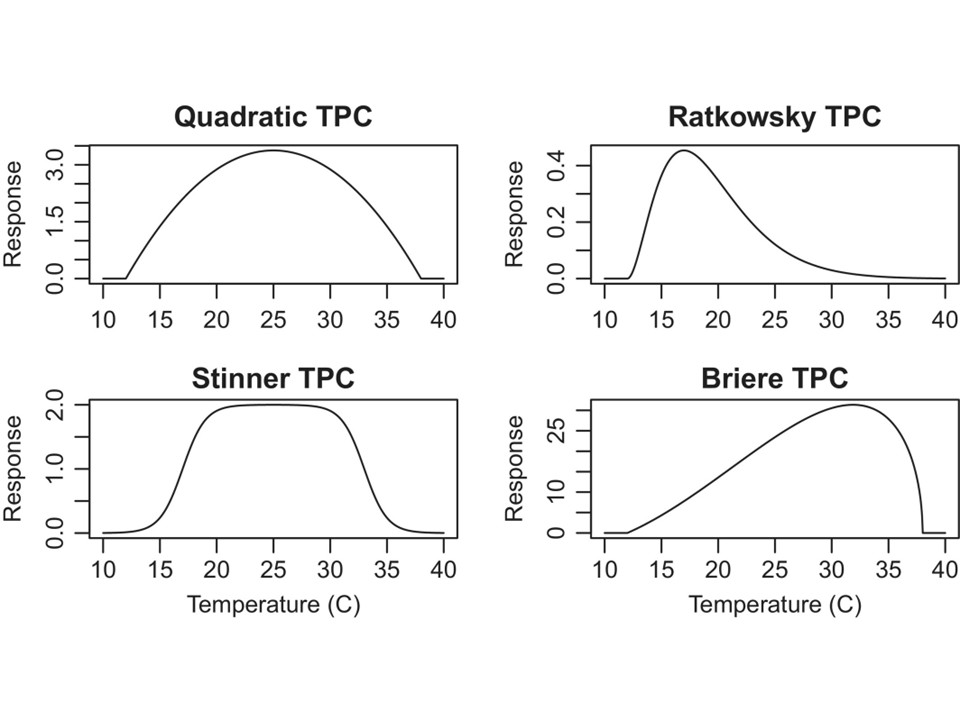
TPCs can have many possible shapes:
Model Validation
Data from the field or other experiments can help validate estimates.